Wisconsin winters can be tough on concrete. That’s one reason the state requires many home footings to extend at least 48 inches below ground level (Wisconsin SPS 321.16, via Village of Fox Crossing). This helps protect home foundations from damage caused by freezing soil.
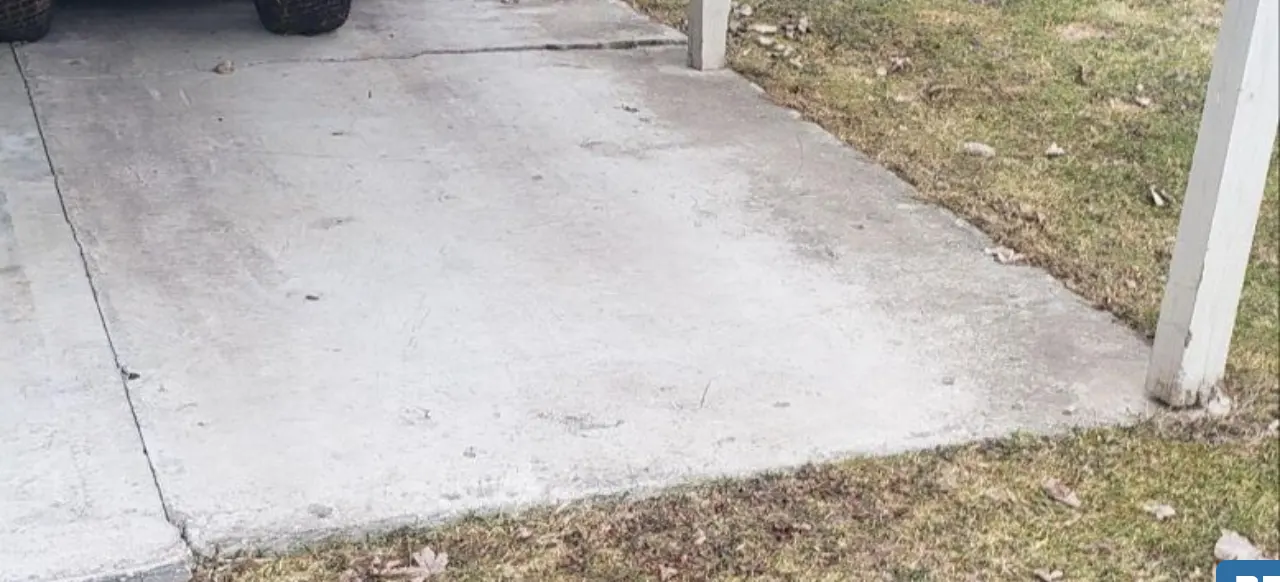
But your driveway and garage floor sit much closer to the surface. When moisture in the soil freezes, it can push concrete upward. As the ground thaws, the soil may settle unevenly, leaving slabs tilted, cracked, or sinking.
Green Bay winters, by the numbers
Green Bay winters bring:
- 144 freezing days per year (GLISA, University of Michigan)
- 11°F average January low (Wisconsin State Climatology Office)
- 56 inches of snow annually (Wisconsin State Climatology Office)
That’s a lot of snow sitting on driveways, melting on sunny days and refreezing at night.
The red clay underneath
Much of the Fox Valley sits on red, clay-rich sediment left behind by glacial Lake Oshkosh (Wisconsin Geological and Natural History Survey). Anyone who has dug a garden here knows it: dense, sticky and slow to drain. Clay like that holds water under a slab well into the fall, so there’s plenty to freeze when winter arrives.
Why it gets worse every year
A slab that has dropped even a little collects more water. Water sits in the low spot, gets under the joint, and freezes. The next spring, the slab drops a little more. Left alone, a quarter-inch lip can become an inch over a few winters.
How frost moves a slab
Water expands as it freezes. Ice is about 9 percent less dense than liquid water (USGS), so wet soil under concrete swells and lifts the slab. In spring the ice melts, the clay turns soft, and the slab settles back down, often lower and tilted.
You see it most in two places:
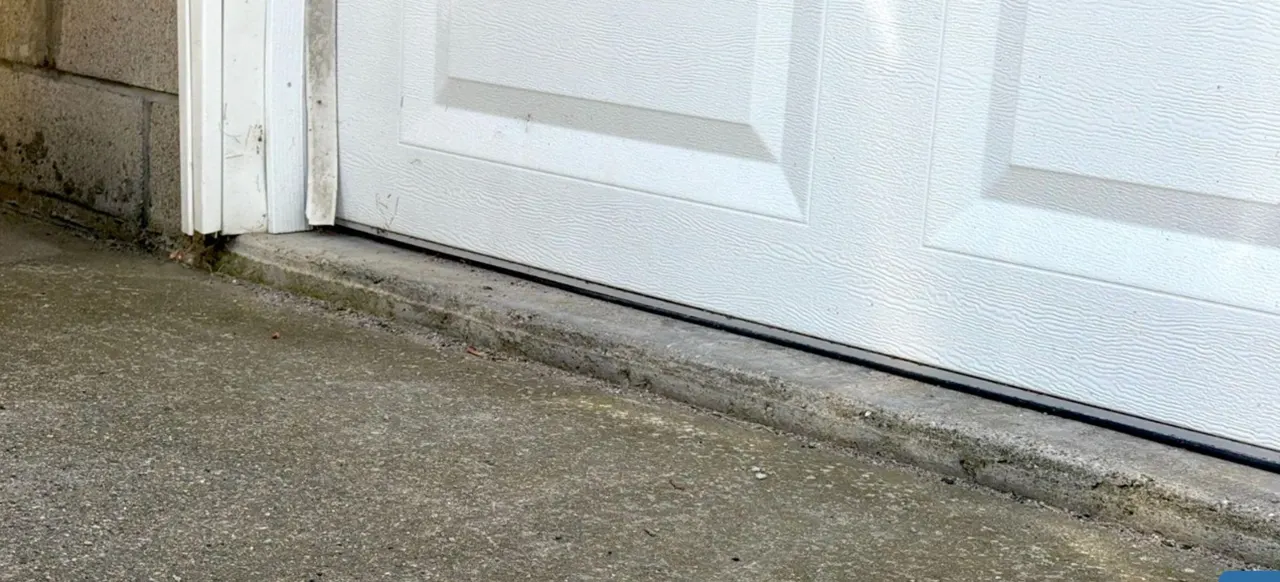
The garage apron. The slab in front of the garage door sits on backfill from when the house was built. That fill holds water, freezes hard, and settles a little more every spring. The result is a lip at the garage floor that catches the snowblower and sends meltwater toward the door.
Inside the garage. Garage floors sink too, usually along the front edge or in one corner. Snow and slush melting off the car every day all winter keeps the soil under the joints wet.
Fixing it without tearing it out
Replacing a driveway or garage floor means breaking it out, hauling it away, pouring new concrete and waiting for it to cure, with the garage out of commission the whole time. Concrete lifting is faster:
- A few small holes are drilled through the slab.
- Polyurethane foam is injected underneath. It expands to fill the voids frost left behind.
- The slab rises back to level, and the holes are patched.
- Joints and cracks can be sealed so less water gets under the slab next winter.
The foam is lightweight, so it doesn’t overload soft clay, and it won’t wash out. You can drive on the slab the same day.
What you can do this winter
- Clear the apron. Don’t let plowed snow pile up on the garage apron or the driveway edge.
- Watch the downspouts. Make sure they empty away from the driveway, not onto it.
- Choose deicers carefully. Calcium chloride and magnesium chloride can react with concrete and add to freeze-thaw damage (FHWA). Avoid anything made with ammonium nitrate or ammonium sulfate. Sand gives traction without the chemistry.
- Take photos. If a lip shows up mid-winter, snap a picture with a tape measure in it. It makes spring estimates quick.
Common questions
Can concrete be lifted in winter?
It depends on the ground. Lifting needs soil that isn’t frozen solid under the slab. Garage floors are often workable in winter because the garage protects them. Outside slabs usually wait for spring.
Who's responsible for the sidewalk in front of my house?
In Green Bay, the property owner is responsible for maintaining and repairing the public sidewalk in front of the property. If the owner doesn’t, the city does the work and bills them (City of Green Bay). Other Fox Valley cities have their own rules, so check with yours.
Will lifting stop it from happening again?
Lifting fills the voids and supports the slab. Sealing the joints and keeping water away from the slab takes away most of what feeds frost heave.
Get a free estimate
If your driveway or garage floor has a new lip or low spot, send photos and we’ll tell you what it’ll take.
Get an Instant Estimate or call (866) 714-2627.
RaiseRite also serves homeowners in Appleton, Oshkosh, and Kaukauna.